Food Justice Knowledge to Action: When Learning Turns Into Community Change
Young people don’t just need information. They need opportunities to use it. At the Strong Mind Strong Body Foundation and our Youth Community Journalism Institute, that belief guides our work.
This fall at Ella Baker School in Minneapolis, students proved what’s possible when learning is designed to lead somewhere real.

In an 11-week elective called Food Justice Knowledge to Action — piloted within Julia Gartzke’s “Science and the World” extension class — 19 middle school students explored food systems, science, culture, and community responsibility through hands-on learning, art, gardening, and youth-led journalism.

The class asked a simple but powerful question: What happens when students are trusted to turn knowledge into action?

The answer came quickly. Each week, students combined food education, creative projects, and storytelling to learn by doing.

Students studied food access, climate, and health with local and national examples, including the work of food changemakers Ron Finley and community-based food leaders in Minnesota. They grew microgreens, brewed herbal teas, painted with plant-based dyes, and connected science to lived experience.

Their reporting highlighted key issues in food access, school lunches, cultural food traditions, and local resources. Students also imagined real-world solutions, including school gardens and food-sharing efforts to support families facing food insecurity.

The class welcomed inspiring guest speakers Princess Titus (Appetite for Change), Chidi Chidozie (University of Minnesota Global Garden), Brownson Arebojie (Sprouted Spirits and 4-H Hydroponics), and Hope Flanagan (Dream of Wild Health). They showed students that food justice brings together science and community care.

Students didn’t just learn about systems. They learned how to participate in them.

Storytelling was central to the program. Students talked with community leaders, reflected on their own food traditions, and reported on issues impacting their families and neighborhoods.

The result was Food Justice News, a 24-page, student-produced print magazine shared with the school community of more than 500 students at Ella Baker.

Through youth journalism, students practiced research, critical thinking, collaboration, and public communication. These skills built confidence and civic voice along the way. They learned that their perspectives matter and that their stories can inform, connect, and inspire others.

When U.S. Immigration and Customs Enforcement (ICE) activity disrupted families and daily routines, food justice became immediate rather than theoretical. Without school lunches or stable work schedules, families needed food. They needed food that felt familiar, comforting, and dignified.

They responded by designing a food-sharing plan centered on care, cultural relevance, and mutual support.
The spirit of the class could be summed up simply: “Fresh foods feed the heart.”

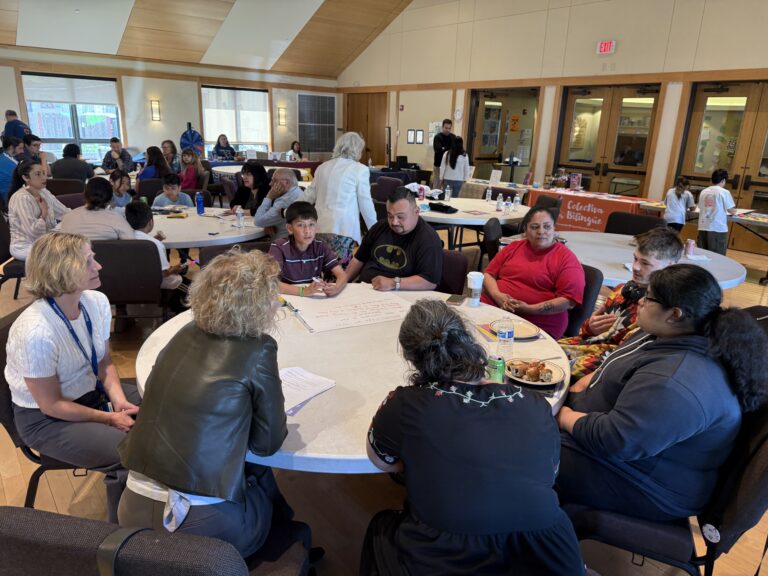
The program concluded with a community celebration that reflected this spirit. Even as some students shifted to remote learning, the class remained joyful, collaborative, and youth-powered.
Developed in partnership with the Strong Mind Strong Body Foundation and the Youth Community Journalism Institute, and led by Leslie Topness, Willa Bartholomay, and Eric Ortiz, Food Justice Knowledge to Action shows what’s possible when education centers young people as leaders, creators, and problem-solvers.

By blending interdisciplinary learning, student voice, and civic engagement, the program empowered students as journalists, artists, researchers, and gardeners. They built real skills while serving real community needs.

This is education innovation in action. When schools partner with community organizations and trust students with meaningful responsibility, learning becomes more than a requirement.
It becomes a pathway to community change.
Stand with the Strong Mind Strong Body Foundation to stand up with our community in Minneapolis. Donate to support our efforts.