Youth Leadership, Food, and Culture Drive Brain Health in Minneapolis
Food is more than fuel.
It is memory. It is culture. It is brain health. And it is justice.
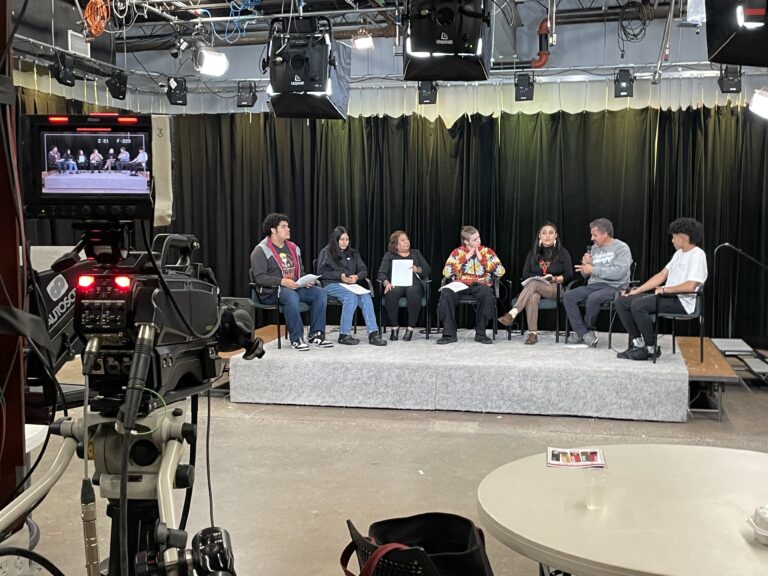
On Saturday, Feb. 21, over 40 community members gathered at the New City Center in South Minneapolis for “Nourishing Your Brain With Food and Culture.”
The event was a two-hour community conversation hosted by the Strong Mind Strong Body Foundation and its Youth Community Journalism Institute to turn ideas into action.

The event built on the youth-led podcast “Food, Culture, and the Growing Brain,” part of the foundation’s “Brain Health Solutions for All” project with the Masonic Institute for the Developing Brain, Carmen Robles and Associates, and Conversaciones de Salud.
The gathering also built on Food Justice Knowledge to Action, a program the foundation launched with middle school students at Ella Baker School in Minneapolis.
The class created Food Justice News, a 24-page print magazine, shared with the school community of more than 500 students at Ella Baker, showing what happens when youth are trusted to turn knowledge into action.

The goal of this community event was clear. Connect residents with food, health, and culture experts. Explore how food fuels the body and brain. Create an intergenerational space for listening and learning. Elevate youth leadership.

Lunch set the tone. Gatherings Cafe at the Minneapolis American Indian Center and Sisters Camelot provided a shared meal. People ate together. They talked. They met neighbors.
Then the chairs moved into a circle.
A Circle, Not a Panel

The event opened with a restorative talking circle moderated by Katrina Mendoza Garcia, executive director of The Blue House. Eleven participants sat shoulder to shoulder: youth journalists, researchers, chefs, gardeners, community leaders, and elders.
They included:
- Dr. Michael Georgieff, co-director of the Masonic Institute for the Developing Brain (MIDB)
- Vern DeFoe, executive of Gatherings Cafe at the Minneapolis American Indian Center
- Chidi Chidozie, a master gardener, farmer, and leader within the University of Minnesota Extension Master Gardener Global Garden program
- Jenny Kedward, a food waste prevention specialist with Hennepin County
- Allen Malicsi, senior equity and inclusion expert from Children’s Minnesota
- Kedar Deshpande, a district commissioner and vice president with the Minneapolis Park and Recreation Board
- Jonathan Lehman, a research professional with the Community Engagement and Education (CEEd) Hub at MIDB
- Nathaniel Harris, a musician and community builder with Nathaniel Harris Live
Two seventh graders helped lead the conversation: Kamille Wilson and Elvin Rodriguez Perez. They are 12-year-old youth journalists with the Youth Community Journalism Institute.
Kamille spoke first in the talking circle, highlighting the power of youth voices.

She shared that wild rice connects her to her Indigenous culture. It reminds her of family, tradition, and community. When she eats it, she feels connected to loved ones.
Her voice grounded the room.

The first round invited participants to name a food that connects them to culture, memory, or identity.
“Tamales,” Katrina shared, describing how her family gathers to prepare them together, each person contributing to the gift.
“Everybody needs to eat,” community elder Nathaniel Harris said.
The room nodded.
Food and the Brain
The second round focused on brain health. How does food affect how we think, feel, and function?
Dr. Michael spoke about nutrition as ecology, viewing food as an interconnected system, where dietary choices interact with human health, the environment, society, and the economy.

Fresh food matters. Eating together matters. Slowing down matters.
“Don’t eat alone,” he said, noting research that links isolation and inflammation to long-term health risks, including obesity.
Chef Vern emphasized quality. “Learn how to cook,” he urged. “Get creative. Use what you grow.”

Youth voices connected the science to school. Better protein. Better focus. Harmful in, harmful out. You eat good. You do good.
The conversation then shifted to health barriers.
Barriers included high diabetes rates, food deserts, limited access to land, cost, processed food, and waste.
Jenny Kedward called herself a “professional trash talker,” citing that 40 percent of food is wasted, and two-thirds of food thrown away at home could still be eaten.

Allen Malicsi reframed the conversation around equity versus equality, citing the Golden Rule. “Treat people the way they want to be treated,” he said. “Give people what they need.”
Chidi Chidozie, who is originally from Nigeria, put it plainly: “Grow what you eat, and you never go hungry.”

From Reflection to Action
The final round asked participants to name one small change to strengthen food justice.
More green spaces. Protect community gardens. Don’t develop over them. Cook together. Eat together. Break the stigma around sharing food, talk with your neighbor, share what you have, and build a sharing network.
“Relationship starts with a conversation around food,” Jenny said.
“Make sure everyone can eat,” Nathaniel added.

Elvin Rodriguez Perez closed the circle with a youth voice, reflecting on the key themes he heard during the conversation: connection, access, youth voice, and action.
He tied the discussion back to the podcast “Food, Culture, and the Growing Brain,” noting how food affects kids’ brain development. He challenged those in the room to take what they learned and apply it in their families, schools, and neighborhoods.

After the circle, everyone in the room moved into seven breakout groups: Culture and Food Traditions, Brain Health and Nutrition, Food Systems and Sustainability, Food Access and Food Justice, Research and Youth Journalism, Community Gardening, and Community Empowerment.
Each group identified insights and actions that could drive community solutions.
At the Culture and Food Traditions table, participants discussed foo foo (a staple dish in West and Central Africa made from root vegetables such as cassava or plantains) and tamales (a traditional Mesoamerican dish made from masa, a corn-based dough, and filled with meats, cheeses, fruits, or other ingredients, then wrapped in a corn husk or banana leaf and steamed). The insight: foods that remind you of home carry power. The action: try different foods and preserve traditions.

Community Gardening participants called gardens essential. Protect them. Expand access. Add cooking education.

Brain Health and Nutrition participants emphasized that nutrients shape brain plasticity. Processed foods cause inflammation. Knowing which nutrients matter at different stages of life can change the brain and health outcomes.

Community Empowerment participants called for youth involvement, cooking classes, affordable food, and the return of home economics education.

Food Systems and Sustainability participants pushed for better food planning, surplus food collection, and increased food philanthropy.
Food Access and Food Justice participants stressed education and awareness of where healthy food resources exist.

At the Research and Youth Journalism table, youth voices led the action planning. Exchange information. Make research accessible. Peer-to-peer learning works. Youth is the best teacher.

Resources and Next Steps
Six community resource tables lined the room: Children’s Minnesota, the Minneapolis American Indian Center, the University of Minnesota Extension Master Gardener Program in Hennepin County, Minnesota WIC (Women, Infants, and Children Nutrition Program), University of Minnesota Extension 4-H Youth Development and MN 4-H Healthy Living, and Hennepin County’s Food Waste Prevention program.

Information flowed. Contacts were exchanged.
The structure was intentional. Restorative circle. Youth-first approach. Science plus lived experience. Clear logistics. Action-oriented close.
The message was consistent.
Food builds brains.
Food builds culture.
Food builds community.
Now, the work continues.

The Strong Mind Strong Body Foundation and our partners will turn these ideas into action through youth journalism, community partnerships, education, and economic opportunities.
Because when youth, elders, researchers, and neighbors gather together, information becomes a relationship.
And connection is where change begins.